Proven efficacy
LISRAYA delivered significant overall improvement, with benefits for skin, muscle, and physical function alongside steroid reduction, in the largest DM study ever conducted.1-3
VALOR study
Proven in the largest DM clinical study ever conducted (VALOR)1,3
VALOR study design. 241 adults with dermatomyositis were randomized 1:1:1 by PhGA-VAS to LISRAYA 30 mg once daily or placebo. Both arms received 52 weeks of double-blind treatment, with a protocol-defined steroid taper between Weeks 12 and 36 to 5 mg per day or less of a prednisone equivalent, with further tapering at the investigator's discretion. The primary endpoint was Total Improvement Score at Week 52.
N=241
Adults with DM
Randomized 1:1:1 by PhGA-VAS*
Double-blind treatment period
Primary endpoint
Total Improvement Score (TIS) at Week 52
*LISRAYA 15 mg (n=81) study arm not shown (unapproved dosage).
PhGA-VAS: Physician’s Global Assessment—Visual Analog Scale; QD: once daily.
Study design highlights1,3
- Largest interventional DM trial ever (N=241)1
- Full year of blinded, placebo-controlled treatment1
- Broad, representative patient population, including full spectrum of DM disease activity and background comorbidities1
- Patients allowed to remain on standard background therapies1
Results from the VALOR study
Overall improvement
Over 2/3 of patients achieved moderate or major disease improvement, with results as early as 4 weeks.1,2
Physical function
LISRAYA patients reported meaningful gains in their ability to perform activities of daily living that require muscle strength, with more than 40% achieving functional remission.1,2
Skin disease
LISRAYA demonstrated benefit for skin disease as well as muscle.1-3
Steroid sparing
LISRAYA enabled most patients to significantly improve their disease while also achieving minimal or no steroid use.1
Overall improvement
LISRAYA delivered rapid, sustained, and significant improvement in overall disease activity1
LISRAYA achieved clinically meaningful separation from placebo on Total Improvement Score (TIS), despite greater steroid reduction in LISRAYA patients than in placebo.1
Mean TIS through Week 521
Line chart comparing the mean Total Improvement Score (TIS) between patients taking LISRAYA (n=81) and those taking placebo (n=79). The X-axis represents the time in weeks (0 to 52), and the Y-axis represents the mean change in TIS (0 to 100). There was a protocol-defined steroid taper between Weeks 12 to 36. The LISRAYA group saw significant separation with substantially greater steroid tapering vs the placebo group throughout the 52 weeks. By Week 52, the mean change in TIS for the LISRAYA group was 47.5 vs 33.3 for the placebo group.
Standard error bars should not be used to determine statistical significance.
*Primary endpoint: P<0.01
SE: standard error.
Substantially greater steroid tapering in the LISRAYA arm1
Moderate and major responses at Week 52
More than 2/3 of patients treated with LISRAYA achieved at least a moderate response and nearly half achieved a major response.1
69%
Achieved a moderate response (TIS ≥40)
vs 47% for placebo1
48%
Achieved a major response (TIS ≥60)
vs 26% for placebo1
LISRAYA produced improvement on each of the 6 core set measures that make up the TIS1
Mean change from baseline in core set measures at Week 521,3
| TIS Measure (score range) | Definition | LISRAYA (n=81) | Placebo (n=79) | Difference |
|---|---|---|---|---|
| Overall disease activity | ||||
| Physician Global Assessment (PhGA; 0-10) | Score measuring overall disease activity as assessed by investigator on Visual Analog Scale (VAS) | -2.6 | -0.9 | Δ -1.6 |
| Patient Global Assessment (PtGA; 0-10) | Score measuring overall disease activity as reported by a patient on VAS | -2.5 | -0.6 | Δ -1.9 |
| Extramuscular Global Assessment (EMGA; 0-10) | Score measuring non-muscle organ involvement (eg, skin, joint, lung, GI, cardiac manifestations) assessed by investigator on VAS | -1.8 | -0.2 | Δ -1.6 |
| Muscle disease activity | ||||
| Manual Muscle Testing (MMT-8; 0-150) | Score evaluating strength across 8 muscle groups assessed by an investigator (higher score indicates greater strength) | 12.3 | 5.9 | Δ 6.4 |
| Muscle Enzymes* | Lab measurement of the most abnormal enzyme (aldolase, CK, ALT, AST, LDH) indicating active muscle injury | 16.9% | 36.8% | Δ -19.9% |
| Activities of daily living | ||||
| Health Assessment Questionnaire-Disability Index (HAQ-DI; 0-3) | Score measuring functional ability across 8 domains of daily living as reported by a patient (eg, dressing, arising, eating, walking, hygiene, reach, grip, and common activities) | -0.3 | 0.3 | Δ -0.6 |
For all the individual measures except MMT-8, lower values represent improvement. For MMT-8, lower values represent worsening.1
*Percent change from baseline for the most abnormal muscle enzyme.
ALT: alanine aminotransferase; AST: aspartate aminotransferase; CK: creatine kinase; GI: gastrointestinal; LDH: lactate dehydrogenase.
Physical function
LISRAYA meaningfully improved patients’ physical function and ability to perform activities of daily living1,2
LISRAYA patients reported significant improvements in their ability to perform daily activities that require muscle strength, like getting dressed, bathing, and climbing stairs.1,2
A closer look at HAQ-DI
Health Assessment Questionnaire-Disability Index (HAQ-DI) is a patient-reported outcome measure that assesses functional ability across 8 domains of daily living4:
- Dressing and grooming: tying shoelaces, buttoning
- Arising: standing up from a chair, getting in/out of bed
- Eating: cutting meat, lifting a cup to the mouth
- Walking: on a flat surface and climbing stairs
- Hygiene: taking a bath, washing/drying, getting on/off the toilet
- Reach: retrieving an object above the head, picking an item off the floor
- Grip: opening car doors, turning faucets on/off
- Common daily activities: running errands, shopping, completing household chores
Scores range from 0-3, with 0 reflecting “no disability” and 3 indicating “severe functional disability.”
Mean change from baseline in HAQ-DI through Week 522
Line chart comparing the mean change in Health Assessment Questionnaire-Disability Index (HAQ-DI) score between patients taking LISRAYA (n=81) and those taking placebo (n=79). By Week 52, the mean change in HAQ-DI score was a reduction of .31 for the LISRAYA group and an increase of .31 for the placebo group. This result for the LISRAYA group exceeded the established minimal clinically important difference of 0.22.
Health Assessment Questionnaire-Disability Index (HAQ-DI) measures difficulty performing activities of daily living ranging from 0 (no disability) to 3 (severe disability).4 The established minimal clinically important difference (MCID) is a decrease of 0.22.5
As steroids were tapered, patients on LISRAYA continued to improve while patients on placebo worsened.1,2
More than 40% of LISRAYA patients even achieved functional remission, meaning they could perform daily activities with essentially no impairment.2
HAQ-DI functional remission (HAQ-DI <0.5) at Week 522
Bar chart comparing the Health Assessment Questionnaire-Disability Index (HAQ-DI) functional remission rate achieved by patients taking LISRAYA (n=81) and those taking placebo (n=79). By Week 52, the HAQ-DI functional remission rate was 44% for the LISRAYA group and 20% for the placebo group.
Post hoc analysis; not prespecified. This analysis was not designed to establish a treatment effect, and no conclusions about benefit can be drawn from it.
Skin improvement
LISRAYA demonstrated benefit for skin disease as well as muscle1-3
LISRAYA generated significant improvement in skin disease activity, with onset of benefit as early as Week 4.1-3
Mean change in CDASI-A from baseline through Week 522
Line chart comparing the mean change in Cutaneous Dermatomyositis Activity and Severity Index-Activity (CDASI-A) between patients taking LISRAYA (n=81) and those taking placebo (n=79). The X-axis represents time in weeks (0 to 52), and the Y-axis represents the mean change in CDASI-A (0 to −16). There was a protocol-defined steroid taper between Weeks 12 to 36. The LISRAYA group saw significant improvements as early as Week 4 and maintained through Week 52 even with substantial corticosteroid tapering vs the placebo group. By Week 52, the LISRAYA group achieved a reduction of 12.2 in CDASI-A vs a reduction of 8.0 for the placebo group.
*P<0.001
Cutaneous Dermatomyositis Activity and Severity Index-Activity (CDASI-A) quantifies active skin inflammation across the body, with higher scores indicating more severe disease activity.3
Nearly half of LISRAYA patients with moderate-to-severe baseline cutaneous disease activity were able to achieve clear or almost clear skin by Week 52.3
Post hoc analysis: Patients with baseline CDA-IGA of ≥3 achieving score of 0/13
Bar chart comparing the Cutaneous Disease Activity Investigator’s Global Assessment (CDA-IGA) response rate between patients with moderate-to-severe baseline cutaneous disease activity taking LISRAYA (n=46) and those taking placebo (n=55). The number of patients who started with a CDA-IGA score of 3 or higher at baseline (indicating moderate or severe) that were able to achieve a score of 0 or 1 (indicating clear or almost clear) at Week 52 was 46% for the LISRAYA group and 22% for the placebo group. P=0.025.
Cutaneous Disease Activity Investigator’s Global Assessment (CDA-IGA) is a rating of overall skin severity ranging from 0 (clear) to 4 (severe).3
Example of LISRAYA patient skin improvement2
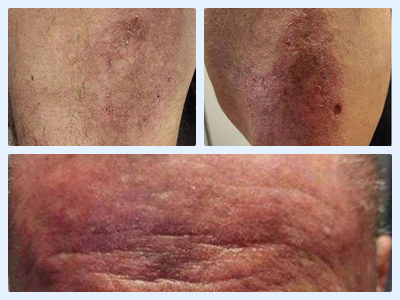
Baseline
Severe ulcerative skin lesions accompanied by deep, intense facial erythema.2
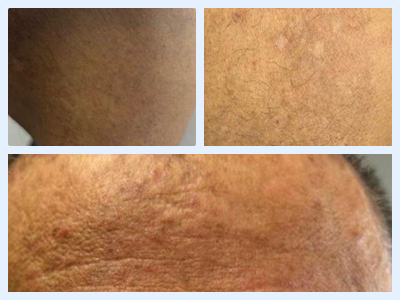
Week 52
Full closure and healing of ulcerations with widespread facial clearing.2
Steroid sparing
LISRAYA delivered simultaneous improvement in disease activity and steroid sparing1
Most LISRAYA patients who started the trial on OCS doses of 7.5 mg/day or greater were able to taper to a minimal dose, and nearly half were able to stop steroids entirely.1
12.2
mg/day
Mean baseline OCS dose
vs 11.3 mg/day for placebo1,3
62%
patients
≤2.5 mg/day at Week 52
vs 38% for placebo1
45%
patients
Zero steroids at Week 52
vs 29% for placebo1
All oral corticosteroid (OCS) dosing is reported as prednisone-equivalent. Data reflect patients on ≥7.5 mg/day background OCS at baseline for the LISRAYA group (n=60) and the placebo group (n=64).1
More than half of LISRAYA patients were able to achieve moderate improvement or better while on minimal or no steroids.1
Moderate or better response (TIS ≥40) with minimal or no steroids (OCS ≤2.5 mg/day)1,2
Bar chart comparing the moderate response rate (defined as a Total Improvement Score of 40 or greater) with an oral corticosteroid (OCS) dose of 2.5 mg per day or less (reported as prednisone-equivalent) between patients taking LISRAYA (n=81) and those taking placebo (n=79). By Week 52, the percentage of patients who achieved this response was 55% for the LISRAYA group and 30% for the placebo group. P=0.0022.
All OCS dosing is reported as prednisone-equivalent. OCS dose assessed at Weeks 48 and 52.1
It’s time to transform DM treatment with LISRAYA
- References: 1. LISRAYA. Prescribing information. Priovant Therapeutics, Inc; 2026.
- 2. Data on file. Priovant Therapeutics, Inc; 2026.
- 3. Mangold AR, et al. JAMA Dermatol. Published online August 26, 2026. doi:10.1001/jamadermatol.2026.3199
- 4. Teuwen MMH, et al. J Clin Med. 2024;13(2):379.
- 5. Singh K, et al. Arthritis Rheumatol. 2022;74(suppl 9).